Election expenditure limits and how they are monitored
प्रकाशित
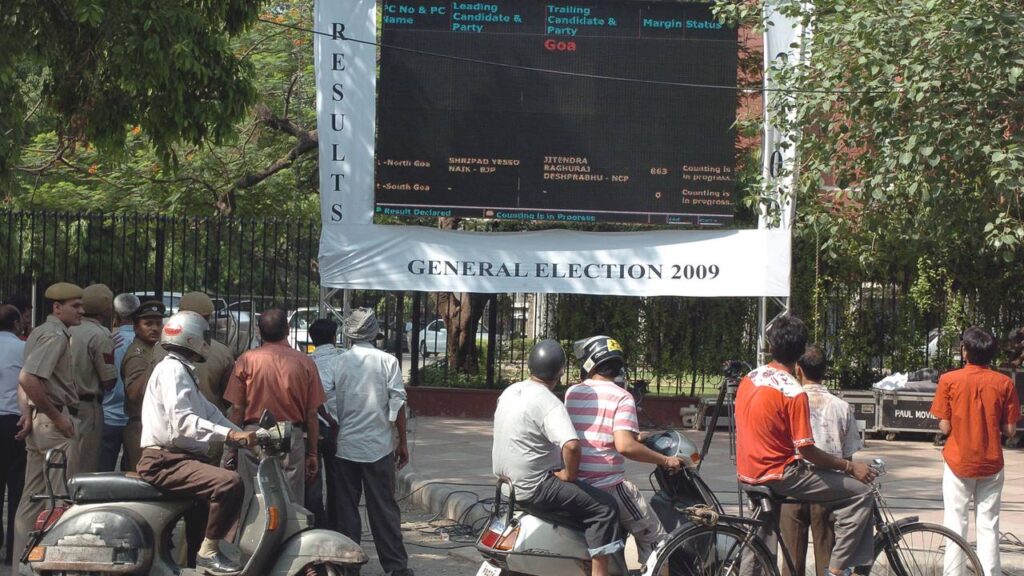
The spending limit applies to a candidate, not to a political party. Section 77 of the Representation of the People Act, 1951 requires each candidate to keep a separate account of expenditure from nomination to the declaration of the result. The limit is set in Rule 90 of the Conduct of Election Rules, 1961, and the central government revises it from time to time.
After the January 2022 revision, the limit for an assembly candidate in a large state is ₹40 lakh and for a Lok Sabha candidate ₹95 lakh. Smaller states and some Union territories have lower limits. Uttar Pradesh is in the large-state category.
How spending is monitored
The Commission appoints expenditure observers for each area. Flying squads, static surveillance teams and video surveillance teams track meetings, vehicles and campaign material. A rate card for material and services is fixed at district level in advance, so that spending is assessed on a common basis.
The candidate must open a separate bank account and spend through it. The account is inspected at least three times during the campaign. The full account must be lodged with the district election officer within 30 days of the result (Section 78).
What happens if the account is not filed or the limit is crossed
If a candidate fails to lodge the account in the prescribed manner and time without good reason, the Commission can disqualify the candidate for three years under Section 10A. Spending above the limit is a corrupt practice under Section 123(6), which can be raised in an election petition.
A party’s general campaign spending is not capped like a candidate’s, but parties must file election expenditure statements with the Commission. The rules on star campaigners’ travel connect to the same system. Knowing the limit is useful to voters, because the statements become public documents.
Key points
- The spending limit applies to a candidate, not to a political party.
- The Commission appoints expenditure observers for each area.
- If a candidate fails to lodge the account in the prescribed manner and time without good reason, the Commission can disqualify the
The structure of the House
The Uttar Pradesh legislative assembly has 403 seats. Of these, 84 are reserved for Scheduled Castes and 2 for Scheduled Tribes. The majority mark is 202. The state sends 80 members to the Lok Sabha and 31 to the Rajya Sabha. The legislative council is a separate House whose members come through different electorates and nomination.
Official 2022 figures for context
For context, the 2022 assembly election had 15,12,46,168 electors and 9,21,62,897 votes polled, with statewide turnout of 60.94 percent. The BJP won 255 seats on 41.29 percent and the Samajwadi Party 111 seats on 32.06 percent. Apna Dal (S) won 12, the RLD 8, the SBSP and NISHAD Party 6 each, Congress and the Jansatta Dal Loktantrik 2 each, and the BSP 1.
The 2017 baseline
The 2017 assembly election had 14,16,63,646 electors and turnout of 61.22 percent. The BJP won 312 seats on 39.67 percent. The Samajwadi Party won 47, the BSP 19, Apna Dal (S) 9, Congress 7 and the SBSP 4. Three independents also won. Between 2017 and 2022, 125 seats changed parties.
Also read:
- Mathura district assembly results 2022
- Ghazipur district assembly results 2022
- Uttar Pradesh Lok Sabha 2024 result
Source: Election Commission of India. Figures are from official statistical reports.
और पढ़ें: आपके लिए चुनी गई ख़बरें → (प्रायोजित)