What an ordinance is and how Article 123 is used
प्रकाशित
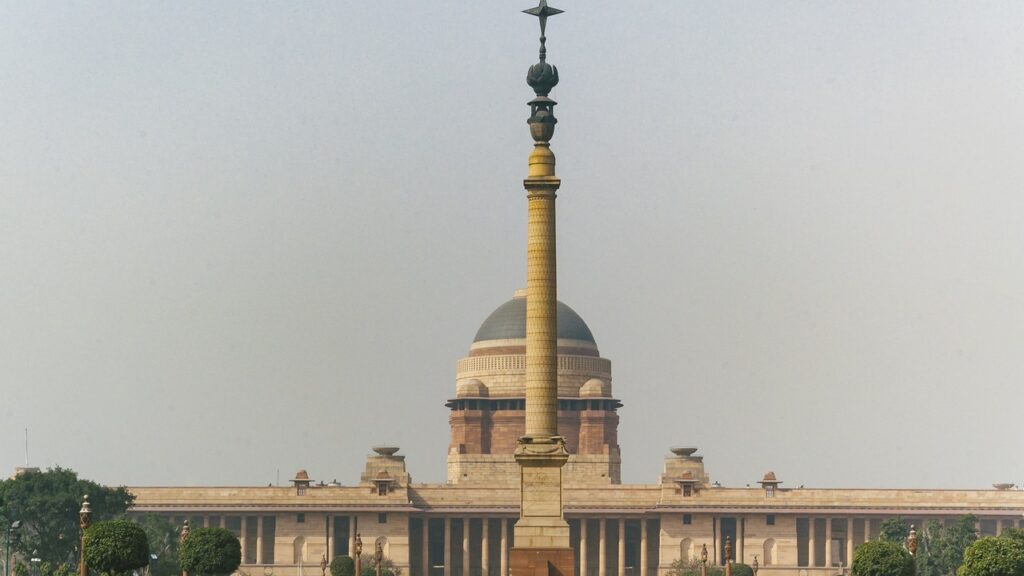
An ordinance is a law made by the executive when Parliament is not in session. Under Article 123, when both Houses or either of them are not in session and the President is satisfied that immediate action is needed, the President may promulgate an ordinance. In practice this is done on the advice of the council of ministers.
An ordinance has the same force as an Act of Parliament, but only on matters on which Parliament can legislate.
Time limits
An ordinance must be laid before both Houses when Parliament reassembles. It lapses six weeks after reassembly unless a law replaces it first, and it ends earlier if both Houses pass resolutions disapproving it. The President can withdraw it at any time.
The gap between two sessions cannot exceed six months (Article 85), so an ordinance ordinarily cannot run beyond six months and six weeks.
The limits set by courts
In R.C. Cooper (1970) the Supreme Court said the President’s satisfaction could be challenged. The 38th Amendment put it beyond the courts, but the 44th Amendment removed that bar. In D.C. Wadhwa (1987) and Krishna Kumar Singh (2017) the court held that repeated re-promulgation is a fraud on the Constitution.
Ordinances in the states
In the states the governor has the same power under Article 213. When the legislature is not in session, the governor of Uttar Pradesh can promulgate an ordinance on the advice of the council of ministers, which must be replaced by law within six weeks of the legislature reassembling.
Key points
- An ordinance is a law made by the executive when Parliament is not in session.
- An ordinance must be laid before both Houses when Parliament reassembles.
- In R.
- In the states the governor has the same power under Article 213.
Official 2022 figures for context
For context, the 2022 assembly election had 15,12,46,168 electors and 9,21,62,897 votes polled, with statewide turnout of 60.94 percent. The BJP won 255 seats on 41.29 percent and the Samajwadi Party 111 seats on 32.06 percent. Apna Dal (S) won 12, the RLD 8, the SBSP and NISHAD Party 6 each, Congress and the Jansatta Dal Loktantrik 2 each, and the BSP 1.
The 2017 baseline
The 2017 assembly election had 14,16,63,646 electors and turnout of 61.22 percent. The BJP won 312 seats on 39.67 percent. The Samajwadi Party won 47, the BSP 19, Apna Dal (S) 9, Congress 7 and the SBSP 4. Three independents also won. Between 2017 and 2022, 125 seats changed parties.
The 2024 Lok Sabha context
In the 2024 Lok Sabha election, Uttar Pradesh’s 80 seats were won as follows: Samajwadi Party 37, BJP 33, Congress 6, RLD 2, Azad Samaj Party (Kanshi Ram) 1 and Apna Dal (S) 1. Lok Sabha and assembly elections turn on different issues and alliances, so the two results should not be added together to reach a conclusion.
The structure of the House
The Uttar Pradesh legislative assembly has 403 seats. Of these, 84 are reserved for Scheduled Castes and 2 for Scheduled Tribes. The majority mark is 202. The state sends 80 members to the Lok Sabha and 31 to the Rajya Sabha. The legislative council is a separate House whose members come through different electorates and nomination.
Also read:
- Ghazipur district assembly results 2022
- Uttar Pradesh Lok Sabha 2024 result
- Meerut district assembly results 2022
Source: Election Commission of India. Figures are from official statistical reports.
और पढ़ें: आपके लिए चुनी गई ख़बरें → (प्रायोजित)