What a presiding officer does on polling day
प्रकाशित
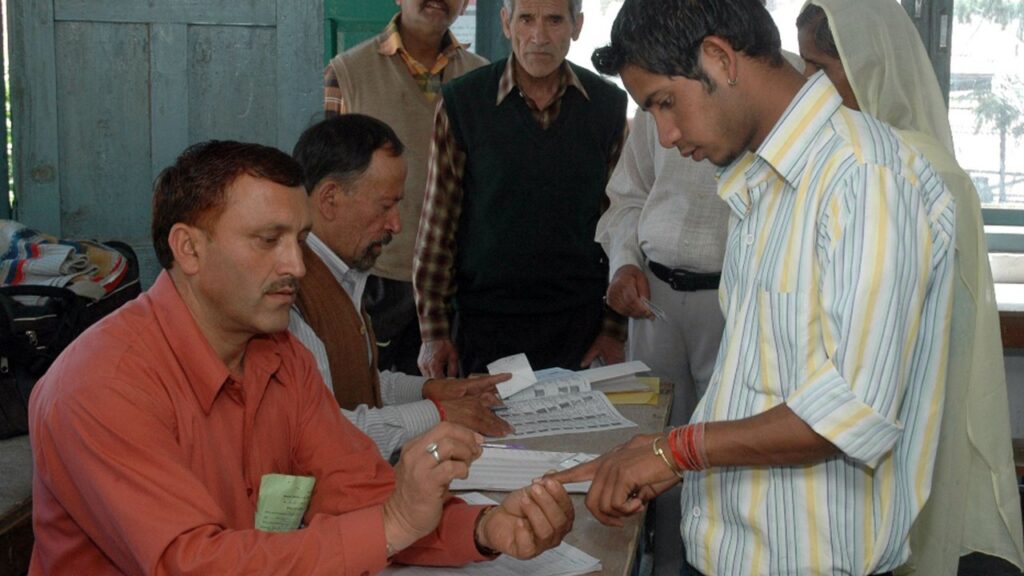
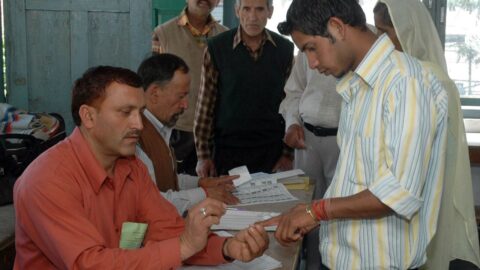
The presiding officer is in charge of a polling station. Under Section 26 of the Representation of the People Act, 1951, the district election officer appoints a presiding officer and the required number of polling officers for each station. They are usually government employees and are trained in advance.
Before the poll
Before voting starts, the presiding officer holds a mock poll in the presence of candidates’ polling agents. Some votes are cast on the EVM and VVPAT, the result is matched, the mock poll data is cleared and the machines are sealed. A certificate is filled in for this.
During the poll
- Overseeing voter identification and entries in the register of voters (Form 17A)
- Arranging indelible ink and the issue of ballots on the control unit
- Handling tendered votes and challenged votes
- Keeping order inside the station
- Recording events in the presiding officer’s diary
When the closing hour arrives, everyone already in the queue is allowed to vote.
After the poll
At the close, the presiding officer presses the close button on the control unit, seals the machines and prepares the account of votes recorded in Form 17C, a copy of which is given to polling agents. The machines and documents are then deposited at the designated place.
Key points
- The presiding officer is in charge of a polling station.
- Before voting starts, the presiding officer holds a mock poll in the presence of candidates’ polling agents.
- __UL__ Overseeing voter identification and entries in the register of voters (Form 17A) Arranging indelible ink and the issue of ballots on
- At the close, the presiding officer presses the close button on the control unit, seals the machines and prepares the account of votes
The 2024 Lok Sabha context
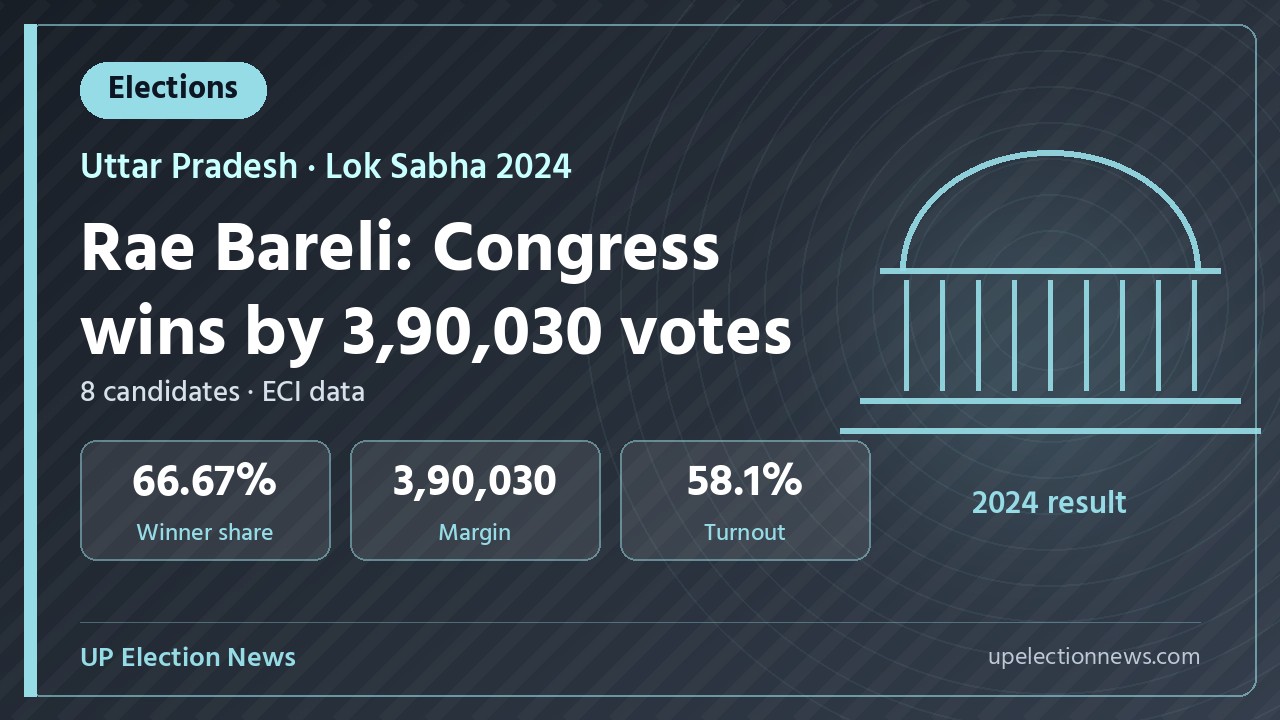
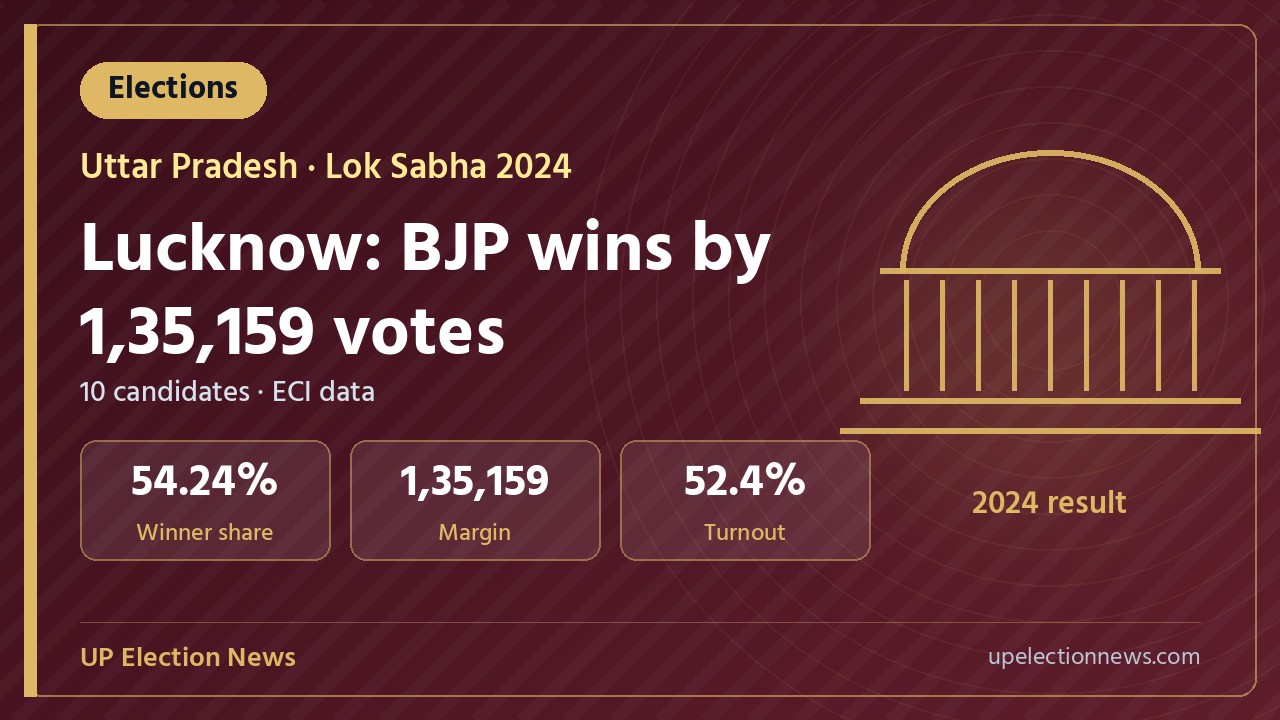
In the 2024 Lok Sabha election, Uttar Pradesh’s 80 seats were won as follows: Samajwadi Party 37, BJP 33, Congress 6, RLD 2, Azad Samaj Party (Kanshi Ram) 1 and Apna Dal (S) 1. Lok Sabha and assembly elections turn on different issues and alliances, so the two results should not be added together to reach a conclusion.
The structure of the House
The Uttar Pradesh legislative assembly has 403 seats. Of these, 84 are reserved for Scheduled Castes and 2 for Scheduled Tribes. The majority mark is 202. The state sends 80 members to the Lok Sabha and 31 to the Rajya Sabha. The legislative council is a separate House whose members come through different electorates and nomination.
Official 2022 figures for context
For context, the 2022 assembly election had 15,12,46,168 electors and 9,21,62,897 votes polled, with statewide turnout of 60.94 percent. The BJP won 255 seats on 41.29 percent and the Samajwadi Party 111 seats on 32.06 percent. Apna Dal (S) won 12, the RLD 8, the SBSP and NISHAD Party 6 each, Congress and the Jansatta Dal Loktantrik 2 each, and the BSP 1.
The 2017 baseline
The 2017 assembly election had 14,16,63,646 electors and turnout of 61.22 percent. The BJP won 312 seats on 39.67 percent. The Samajwadi Party won 47, the BSP 19, Apna Dal (S) 9, Congress 7 and the SBSP 4. Three independents also won. Between 2017 and 2022, 125 seats changed parties.
Also read:
- Meerut district assembly results 2022
- Saharanpur district assembly results 2022
- Ayodhya district assembly results 2022
Source: Election Commission of India. Figures are from official statistical reports.
और पढ़ें: आपके लिए चुनी गई ख़बरें → (प्रायोजित)