Vidhan Sabha and Vidhan Parishad: how the two UP Houses differ
प्रकाशित
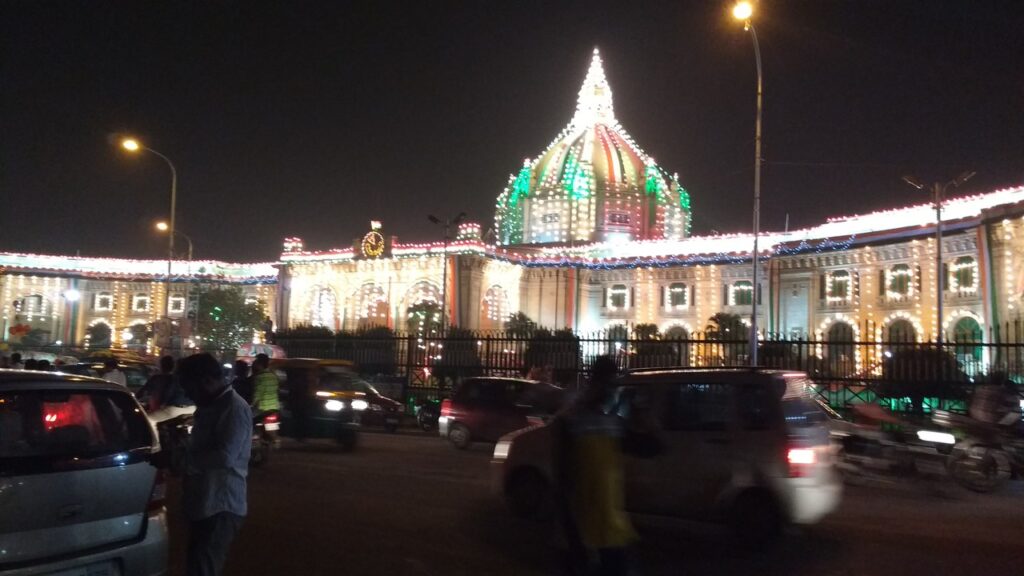
The Vidhan Sabha and the Vidhan Parishad are the two Houses of the Uttar Pradesh legislature. The Vidhan Sabha is the lower House, with 403 members elected directly by voters. The Vidhan Parishad is the upper House, with 100 members who come through different routes. The government rests on a majority in the Vidhan Sabha, not the council.
Article 168 lists the states with two Houses, and Article 169 provides the process to create or abolish a council. Article 171 fixes the composition of the council.
How council members arrive
Under Article 171, about one-third of the members are elected by MLAs, one-third by electorates of local authorities, one-twelfth by graduates and one-twelfth by teachers, and the rest are nominated by the governor. In Uttar Pradesh the numbers are as shown below.
| Category | Members |
|---|---|
| Elected by MLAs | 38 |
| Local authorities | 36 |
| Graduates | 8 |
| Teachers | 8 |
| Nominated by the governor | 10 |
Table: UP Election News. Basis: Article 171 and the numbers fixed for the state.
The assembly has a five-year term and can be dissolved. The council is a permanent House and is not dissolved. Its members serve six-year terms, and about one-third retire every two years.
The gap in power over bills
A money bill can be introduced only in the assembly. The council can hold it for at most 14 days, and the assembly is not bound by its recommendations (Article 198). On an ordinary bill the assembly also has the last word. Under Article 197 the council can delay a bill for up to three months the first time and one month if it is passed again.
The council of ministers is responsible to the assembly, not the council. A no-confidence motion lies only in the assembly. A council member can still become a minister or chief minister. The council questions the government through debates, questions and committees.
Who can contest
The minimum age is 25 years for the assembly and 30 years for the council (Article 173). The Election Commission of India conducts elections to both. Separate rolls are prepared for graduates’ and teachers’ constituencies, and only qualifying graduates or teachers are registered on them.
Key points
- The Vidhan Sabha and the Vidhan Parishad are the two Houses of the Uttar Pradesh legislature.
- Under Article 171, about one-third of the members are elected by MLAs, one-third by electorates of local authorities, one-twelfth by
- A money bill can be introduced only in the assembly.
- The minimum age is 25 years for the assembly and 30 years for the council (Article 173).
The 2024 Lok Sabha context
In the 2024 Lok Sabha election, Uttar Pradesh’s 80 seats were won as follows: Samajwadi Party 37, BJP 33, Congress 6, RLD 2, Azad Samaj Party (Kanshi Ram) 1 and Apna Dal (S) 1. Lok Sabha and assembly elections turn on different issues and alliances, so the two results should not be added together to reach a conclusion.
The structure of the House
The Uttar Pradesh legislative assembly has 403 seats. Of these, 84 are reserved for Scheduled Castes and 2 for Scheduled Tribes. The majority mark is 202. The state sends 80 members to the Lok Sabha and 31 to the Rajya Sabha. The legislative council is a separate House whose members come through different electorates and nomination.
Also read:
- Ayodhya district assembly results 2022
- Budaun district assembly results 2022
- Mathura district assembly results 2022
Source: Election Commission of India. Figures are from official statistical reports.
और पढ़ें: आपके लिए चुनी गई ख़बरें → (प्रायोजित)