What Form 26 is and what a candidate must disclose in the affidavit
प्रकाशित
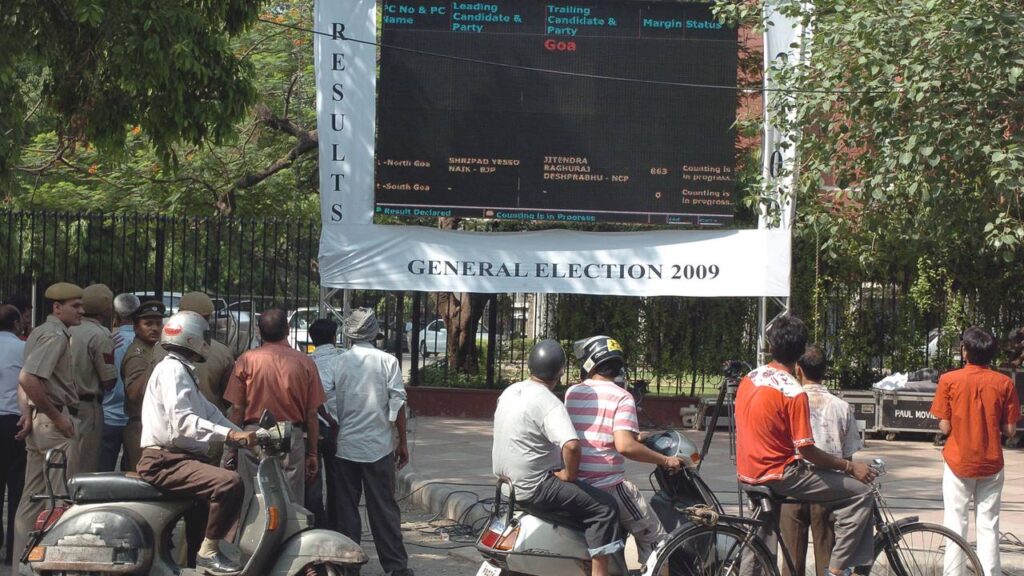
Form 26 is the affidavit every candidate for the Lok Sabha or a state assembly files along with the nomination paper. It is prescribed under Rule 4A of the Conduct of Election Rules, 1961, and is sworn before an oath commissioner, a notary or a first class magistrate.
It grew out of Supreme Court judgments. In Union of India v. Association for Democratic Reforms (2002) and in the PUCL case (2003), the court held that voters have a right to know a candidate’s background.
What the affidavit must contain
- Pending criminal cases in which charges are framed or cognisance has been taken, and past convictions
- Movable and immovable assets of the candidate, spouse and dependants
- Liabilities, including government dues
- Educational qualifications
- PAN and income tax return details
In Resurgence India (2013) the Supreme Court said no column can be left blank. If an item does not apply, the candidate must say so.
The cost of false information
Under Section 125A of the Representation of the People Act, 1951, concealing information or filing false information in the affidavit is an offence punishable with up to six months in prison, a fine, or both.
Candidates with criminal cases must publish the details three times in newspapers and on television. That rule came through Commission instructions after the Public Interest Foundation judgment of 2018. Parties must also publish details of such candidates.
How voters can see it
The Commission puts candidates’ affidavits on its website, so voters can read those of the candidates in their constituency once nominations are filed. The Commission’s Know Your Candidate app also shows criminal antecedents.
Key points
- Form 26 is the affidavit every candidate for the Lok Sabha or a state assembly files along with the nomination paper.
- __UL__ Pending criminal cases in which charges are framed or cognisance has been taken, and past convictions Movable and immovable assets
- Under Section 125A of the Representation of the People Act, 1951, concealing information or filing false information in the affidavit is an
- The Commission puts candidates’ affidavits on its website, so voters can read those of the candidates in their constituency once
The 2017 baseline
The 2017 assembly election had 14,16,63,646 electors and turnout of 61.22 percent. The BJP won 312 seats on 39.67 percent. The Samajwadi Party won 47, the BSP 19, Apna Dal (S) 9, Congress 7 and the SBSP 4. Three independents also won. Between 2017 and 2022, 125 seats changed parties.
The 2024 Lok Sabha context
In the 2024 Lok Sabha election, Uttar Pradesh’s 80 seats were won as follows: Samajwadi Party 37, BJP 33, Congress 6, RLD 2, Azad Samaj Party (Kanshi Ram) 1 and Apna Dal (S) 1. Lok Sabha and assembly elections turn on different issues and alliances, so the two results should not be added together to reach a conclusion.
The structure of the House
The Uttar Pradesh legislative assembly has 403 seats. Of these, 84 are reserved for Scheduled Castes and 2 for Scheduled Tribes. The majority mark is 202. The state sends 80 members to the Lok Sabha and 31 to the Rajya Sabha. The legislative council is a separate House whose members come through different electorates and nomination.
Also read:
- Uttar Pradesh Lok Sabha 2024 result
- Meerut district assembly results 2022
- Saharanpur district assembly results 2022
Source: Election Commission of India. Figures are from official statistical reports.
और पढ़ें: आपके लिए चुनी गई ख़बरें → (प्रायोजित)