How a coalition government is formed and how it works
प्रकाशित
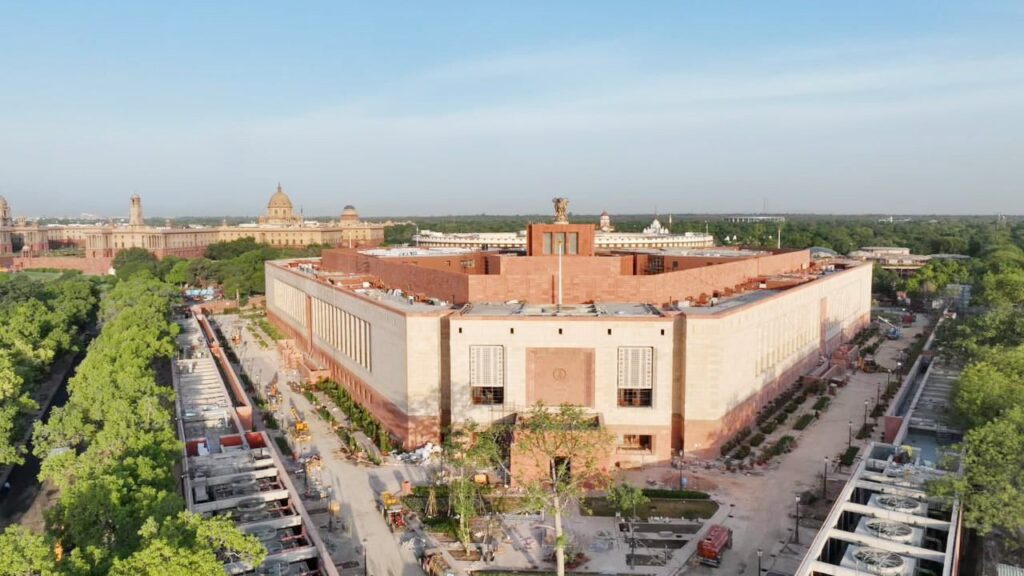
A coalition government forms when two or more parties together command a majority in the House and run the government jointly. Some parties join the council of ministers and others support from outside. The Constitution does not use the word coalition, but the arrangement works on the principle of collective responsibility.
How a coalition works
- Parties may agree a common minimum programme
- Ministerial posts are shared by agreement
- A coordination committee may settle differences
- The council of ministers remains collectively responsible to the House (Articles 75(3) and 164(2))
Since the 91st Amendment the council of ministers at the Centre or in a state cannot exceed 15 percent of the House’s total strength. In Uttar Pradesh that means at most 60 ministers.
The Uttar Pradesh experience
Uttar Pradesh’s first non-Congress government, in 1967, was a Samyukta Vidhayak Dal coalition led by Charan Singh. In 1993 the SP and BSP formed a government together. In 1997 and 2002 governments were formed with BSP and BJP cooperation.
Since 2007 every assembly election has given one party a majority on its own. Even so, the BJP governments of 2017 and 2022 included ministers from allies.
When support is withdrawn
If an ally withdraws support and the government is reduced to a minority, the governor can ask the chief minister to prove the majority in the House. Since Bommai, that test takes place on the floor of the House.
Key points
- A coalition government forms when two or more parties together command a majority in the House and run the government jointly.
- __UL__ Parties may agree a common minimum programme Ministerial posts are shared by agreement A coordination committee may settle
- Uttar Pradesh’s first non-Congress government, in 1967, was a Samyukta Vidhayak Dal coalition led by Charan Singh.
- If an ally withdraws support and the government is reduced to a minority, the governor can ask the chief minister to prove the majority in
The structure of the House
The Uttar Pradesh legislative assembly has 403 seats. Of these, 84 are reserved for Scheduled Castes and 2 for Scheduled Tribes. The majority mark is 202. The state sends 80 members to the Lok Sabha and 31 to the Rajya Sabha. The legislative council is a separate House whose members come through different electorates and nomination.
Official 2022 figures for context
For context, the 2022 assembly election had 15,12,46,168 electors and 9,21,62,897 votes polled, with statewide turnout of 60.94 percent. The BJP won 255 seats on 41.29 percent and the Samajwadi Party 111 seats on 32.06 percent. Apna Dal (S) won 12, the RLD 8, the SBSP and NISHAD Party 6 each, Congress and the Jansatta Dal Loktantrik 2 each, and the BSP 1.
The 2017 baseline
The 2017 assembly election had 14,16,63,646 electors and turnout of 61.22 percent. The BJP won 312 seats on 39.67 percent. The Samajwadi Party won 47, the BSP 19, Apna Dal (S) 9, Congress 7 and the SBSP 4. Three independents also won. Between 2017 and 2022, 125 seats changed parties.
Also read:
- Budaun district assembly results 2022
- Mathura district assembly results 2022
- Ghazipur district assembly results 2022
Source: Election Commission of India. Figures are from official statistical reports.
और पढ़ें: आपके लिए चुनी गई ख़बरें → (प्रायोजित)