Why a mock poll is held before voting starts
प्रकाशित

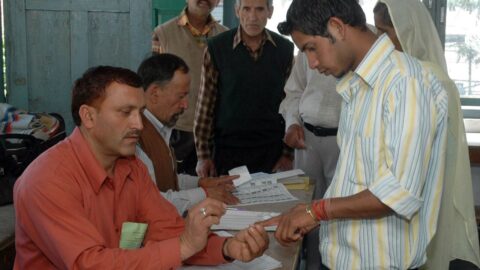
A mock poll is held before actual voting to show that the EVM and VVPAT are working correctly. Under Commission instructions it is held at the polling station about 90 minutes before the scheduled start of the poll, in the presence of candidates’ polling agents.
How it is done
- The presiding officer shows agents that no votes are stored in the control unit
- Votes are cast for each candidate and NOTA, at least 50 votes in all
- The control unit result is matched with a count of VVPAT slips
- Mock poll data is cleared, and the slips are stamped as mock poll slips and sealed in a separate envelope
- The presiding officer fills in a mock poll certificate, which agents also sign
If agents are absent
If no agent arrives on time, the presiding officer can start the mock poll after a short wait so that voting begins on time. This is noted in the diary. If the mock poll shows a fault, the machine is replaced and a fresh mock poll is held on the new one.
If mock poll data is not cleared
Occasionally mock poll data is not cleared. The Commission’s instructions provide a separate procedure, under which that machine’s result is checked against a count of VVPAT slips at counting. The purpose of the mock poll is to keep trust in the machine and the process transparent.
Key points
- A mock poll is held before actual voting to show that the EVM and VVPAT are working correctly.
- __UL__ The presiding officer shows agents that no votes are stored in the control unit Votes are cast for each candidate and NOTA, at least
- If no agent arrives on time, the presiding officer can start the mock poll after a short wait so that voting begins on time.
- Occasionally mock poll data is not cleared.
Official 2022 figures for context
For context, the 2022 assembly election had 15,12,46,168 electors and 9,21,62,897 votes polled, with statewide turnout of 60.94 percent. The BJP won 255 seats on 41.29 percent and the Samajwadi Party 111 seats on 32.06 percent. Apna Dal (S) won 12, the RLD 8, the SBSP and NISHAD Party 6 each, Congress and the Jansatta Dal Loktantrik 2 each, and the BSP 1.
The 2017 baseline
The 2017 assembly election had 14,16,63,646 electors and turnout of 61.22 percent. The BJP won 312 seats on 39.67 percent. The Samajwadi Party won 47, the BSP 19, Apna Dal (S) 9, Congress 7 and the SBSP 4. Three independents also won. Between 2017 and 2022, 125 seats changed parties.
The 2024 Lok Sabha context
In the 2024 Lok Sabha election, Uttar Pradesh’s 80 seats were won as follows: Samajwadi Party 37, BJP 33, Congress 6, RLD 2, Azad Samaj Party (Kanshi Ram) 1 and Apna Dal (S) 1. Lok Sabha and assembly elections turn on different issues and alliances, so the two results should not be added together to reach a conclusion.
Also read:
- Budaun district assembly results 2022
- Mathura district assembly results 2022
- Ghazipur district assembly results 2022
Source: Election Commission of India. Figures are from official statistical reports.
और पढ़ें: आपके लिए चुनी गई ख़बरें → (प्रायोजित)