The 15 percent cap on the Union council of ministers
प्रकाशित
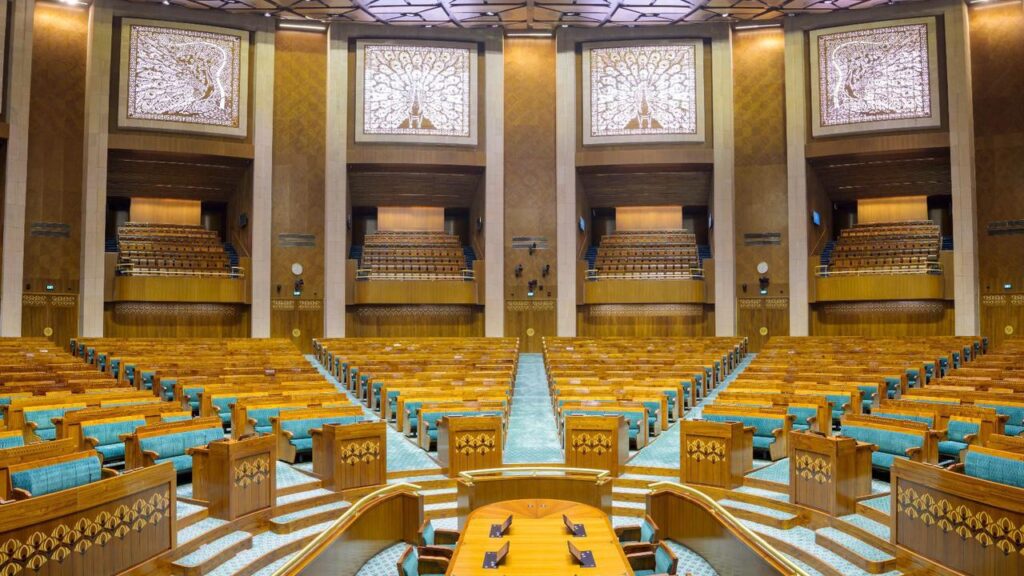
The Union council of ministers is also capped at 15 percent. Article 75(1A) says the council, including the Prime Minister, shall not exceed 15 percent of the strength of the Lok Sabha. The Lok Sabha has 543 elected members, and the Union cap is applied to that figure.
The provision is part of the 91st Constitutional Amendment. Article 164(1A) sets the same kind of cap for a state council of ministers. Both rules exist to stop cabinets from growing without a constitutional brake.
Who is counted
The Prime Minister is included in the cap. Cabinet ministers, ministers of state with independent charge and ministers of state all fall within the same upper limit. A deputy prime minister, if appointed, is a member of the council and is counted inside the same figure.
Fifteen percent means the council cannot go above that ratio. The exact whole-number ceiling follows from the cap. It is a constitutional condition, not an internal policy of the government of the day. A government that has a Lok Sabha majority is still bound by it.
Responsibility to the House
Whatever the size, the council remains collectively responsible to the Lok Sabha. The Prime Minister advises the President on who should be sworn in. Resignation and dismissal also take place inside this frame.
The same logic applies in Uttar Pradesh under Article 164(1A), where the cap is 15 percent of 403 assembly members. The Union and state ceilings are calculated on different Houses, but the principle is the same.
Key points
- The Union council of ministers is also capped at 15 percent.
- The Prime Minister is included in the cap.
- Whatever the size, the council remains collectively responsible to the Lok Sabha.
The structure of the House
The Uttar Pradesh legislative assembly has 403 seats. Of these, 84 are reserved for Scheduled Castes and 2 for Scheduled Tribes. The majority mark is 202. The state sends 80 members to the Lok Sabha and 31 to the Rajya Sabha. The legislative council is a separate House whose members come through different electorates and nomination.
Official 2022 figures for context
For context, the 2022 assembly election had 15,12,46,168 electors and 9,21,62,897 votes polled, with statewide turnout of 60.94 percent. The BJP won 255 seats on 41.29 percent and the Samajwadi Party 111 seats on 32.06 percent. Apna Dal (S) won 12, the RLD 8, the SBSP and NISHAD Party 6 each, Congress and the Jansatta Dal Loktantrik 2 each, and the BSP 1.
The 2017 baseline
The 2017 assembly election had 14,16,63,646 electors and turnout of 61.22 percent. The BJP won 312 seats on 39.67 percent. The Samajwadi Party won 47, the BSP 19, Apna Dal (S) 9, Congress 7 and the SBSP 4. Three independents also won. Between 2017 and 2022, 125 seats changed parties.
The 2024 Lok Sabha context
In the 2024 Lok Sabha election, Uttar Pradesh’s 80 seats were won as follows: Samajwadi Party 37, BJP 33, Congress 6, RLD 2, Azad Samaj Party (Kanshi Ram) 1 and Apna Dal (S) 1. Lok Sabha and assembly elections turn on different issues and alliances, so the two results should not be added together to reach a conclusion.
Also read:
- Saharanpur district assembly results 2022
- Ayodhya district assembly results 2022
- Budaun district assembly results 2022
और पढ़ें: आपके लिए चुनी गई ख़बरें → (प्रायोजित)